Best Leg Day Workout for Beginners: Complete Guide
Master your first leg workout with this complete beginner's guide. Includes 6 essential exercises, form tips, and Singapore-specific gym advice.
Links here, including to our partner brand OnWhey, may earn us a commission at no extra cost to you.
The best beginner leg day workout trains all four major muscle groups (quads, hamstrings, glutes, calves) using 5-6 compound and isolation exercises for 45-60 minutes, performed twice per weekwith 48-72 hours rest between sessions. Start with goblet squats, Romanian deadlifts, and leg press before progressing to barbell movements.
Beginner Leg Day Summary
Leg day has earned its reputation as the most challenging workout of the week for good reason. Your legs contain the largest muscle groups in your entire body—the quadriceps, hamstrings, and glutes—and training them properly demands significant energy, focus, and recovery time. But this effort pays dividends that extend far beyond aesthetics.
Strong legs improve everything from your daily commute (climbing MRT stairs, standing during rush hour) to your weekend activities (hiking at MacRitchie, playing football at East Coast Park). They also boost your metabolic rate, meaning you burn more calories even at rest. And because compound leg exercises like squats and deadlifts trigger greater hormonal responses, training legs actually helps build muscle throughout your entire body.
This comprehensive guide provides everything you need to build an effective leg day routine from scratch—whether you're training at a fully-equipped commercial gym, working out at home with minimal equipment, or recovering from an injury and need modified exercises.
Why Leg Day Actually Matters for Beginners
"Never skip leg day" isn't just a gym meme—it's backed by exercise science. Your lower body contains roughly 50% of your total muscle mass, making it impossible to achieve balanced strength or physique development without dedicated leg training. Here's what the research shows:
Metabolic Benefits
- +
Burns 50-70% more calories than upper body workouts
- +
Increases resting metabolic rate for 24-48 hours post-workout
- +
Triggers greater EPOC (excess post-exercise oxygen consumption)
Hormonal Response
- +
Squats and deadlifts increase testosterone production
- +
Greater growth hormone release than isolation exercises
- +
Improved insulin sensitivity and glucose metabolism
The Biggest Beginner Mistake
Most beginners focus exclusively on "mirror muscles"—chest, biceps, and abs—while neglecting legs. This creates muscle imbalances that eventually cause postural problems, knee pain, and limited athletic performance. If you're only training upper body, you're building an unstable foundation.
Understanding Your Leg Muscles
Before diving into exercises, understanding basic leg anatomy helps you feel the right muscles working and choose exercises that target your weak points. Your legs consist of four major muscle groups:
Quadriceps (Front Thigh)
Four muscles that extend (straighten) your knee. The largest muscle group in your body and primary driver of squats, leg press, and lunges.
Function: Knee extension, hip flexion
Best exercises:
Squats, leg press, leg extensions, lunges
Hamstrings (Back Thigh)
Three muscles that bend your knee and extend your hip. Often neglected, leading to quad-hamstring imbalances that increase injury risk.
Function: Knee flexion, hip extension
Best exercises:
Romanian deadlifts, leg curls, good mornings
Glutes (Buttocks)
The gluteus maximus is your largest and most powerful muscle. Critical for hip extension, stability, and explosive movements like jumping and sprinting.
Function:
Hip extension, rotation, abduction
Best exercises:
Hip thrusts, squats, deadlifts, Bulgarian split squats
Calves (Lower Leg)
Two muscles (gastrocnemius and soleus) that point your toes downward. Essential for walking, running, and ankle stability.
Function: Ankle plantarflexion
Best exercises:
Standing calf raises, seated calf raises, jump rope
How to Choose Your Leg Day Approach
Not all beginners are the same. Your ideal leg day workout depends on your experience level, available equipment, and any physical limitations. Find your profile below:
Never Trained Legs Before (or It's Been Years)
You're starting from zero, possibly intimidated by the squat rack, and unsure about proper form. Your priority is building foundational movement patterns without injury.
Your Approach:
- • Start with bodyweight exercises (air squats, lunges) for 2-3 weeks
- • Progress to goblet squats and dumbbell RDLs (not barbell)
- • Use machines (leg press, leg curl) to build strength safely
- • Focus on 12-15 reps with perfect form—weight doesn't matter yet
- • Consider 2-3 personal training sessions to learn movement patterns
Training at Home with Limited Equipment
You have dumbbells and maybe a bench, but no squat rack or leg press machine. You need effective alternatives that still build strength and muscle.
Your Approach:
- • Master goblet squats with heavy dumbbells (up to 30kg)
- • Bulgarian split squats are your quad-builder (single-leg = double intensity)
- • Dumbbell Romanian deadlifts for hamstrings and glutes
- • Single-leg calf raises on stairs (add dumbbell for resistance)
- • Resistance bands add challenge to bodyweight movements
Access to Full Gym Equipment
You have access to a commercial gym with squat racks, leg press, cable machines, and free weights. You want the most effective workout possible.
Your Approach:
- • Start with compound barbell movements (squats, deadlifts)
- • Use machines to isolate and fatigue muscles after compounds
- • Take advantage of leg press for high-volume quad work
- • Cable machines enable constant tension exercises
- • Follow the complete workout program below exactly
Returning from Knee, Hip, or Back Issues
You've had a knee injury, hip problems, or lower back pain and need to rebuild strength carefully without aggravating old injuries.
Your Approach:
- • Get clearance from physiotherapist before starting
- • Machines provide controlled range of motion (leg press, leg curl)
- • Avoid deep squats initially—box squats limit depth safely
- • Strengthen supporting muscles first (VMO, glute medius)
- • Progress slowly: same weight for 3-4 weeks before increasing
Complete Beginner Leg Day Workout
This workout hits all four major leg muscle groups using a mix of compound and isolation exercises. Perform this workout twice per week with at least 48 hours between sessions.
Warm-Up (5-10 minutes)
Never skip this. Cold muscles are injury-prone, and warm muscles perform better.
Cardio (3-5 minutes)
- • Stationary bike at moderate pace
- • Treadmill walk at incline
- • Jump rope (if experienced)
Dynamic Stretches
- • 10 leg swings each side (front-to-back)
- • 10 lateral leg swings each side
- • 10 bodyweight squats
- • 5 deep lunges with rotation each side
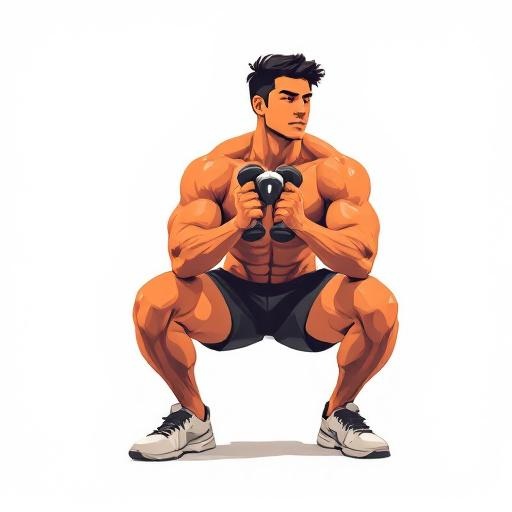
Exercise 1: Goblet Squat
Primary: Quadriceps, Glutes | Secondary: Core, Adductors
3-4
Sets
10-12
Reps
60-90s
Rest
Why This Exercise
The goblet squat is the best squat variation for beginners because holding the weight in front naturally improves posture—you can't round your back without dropping the weight. It teaches proper squat mechanics before progressing to barbell squats.
Step-by-Step Form
- Hold a dumbbell or kettlebell vertically at chest height, cupping the top of the weight
- Stand with feet slightly wider than shoulder-width, toes turned out 15-30 degrees
- Take a deep breath and brace your core as if preparing for a punch
- Initiate the squat by pushing your hips back, then bending your knees
- Keep your chest up and elbows between your knees as you descend
- Lower until thighs are at least parallel to the floor (or as deep as comfortable)
- Drive through your whole foot (not just toes) to stand back up
- Squeeze glutes at the top, then immediately begin the next rep
Common Mistakes to Avoid
Knees caving inward: Push knees out over your toes throughout the movement
Rising onto toes: Keep heels planted; if they lift, you need ankle mobility work
Rounding lower back: Keep chest proud and core braced; use a lighter weight
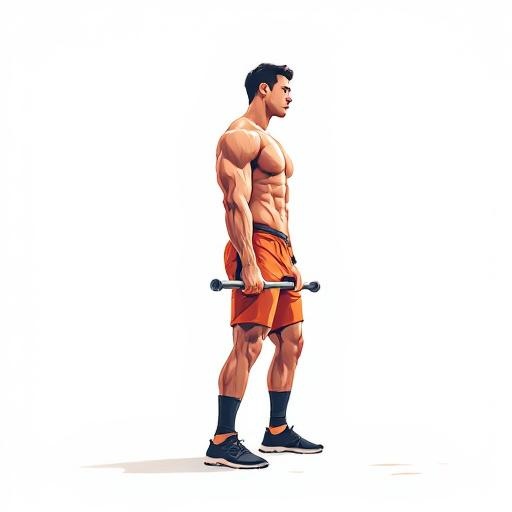
Exercise 2: Romanian Deadlift (RDL)
Primary: Hamstrings, Glutes | Secondary: Lower Back, Core
3-4
Sets
10-12
Reps
60-90s
Rest
Why This Exercise
The RDL is essential for hamstring development and posterior chain strength. Unlike leg curls (which only bend the knee), RDLs train the hamstrings' hip extension function, which is crucial for athletic performance and preventing muscle imbalances.
Step-by-Step Form
- Stand with feet hip-width apart, holding dumbbells in front of your thighs
- Unlock your knees slightly and maintain this knee angle throughout
- Hinge at the hips by pushing your butt straight back (imagine closing a car door with your butt)
- Keep the weights close to your legs—they should almost touch your shins
- Lower until you feel a strong stretch in your hamstrings (usually mid-shin level)
- Keep your back flat and shoulders pulled back—never round your spine
- Drive hips forward and squeeze glutes to return to standing
- Do not hyperextend at the top—just stand tall with neutral spine
Common Mistakes to Avoid
Bending knees too much: This turns it into a regular deadlift; keep slight knee bend constant
Rounding lower back: Stop the descent when your back wants to round
Weights drifting forward: Keep dumbbells grazing your legs throughout
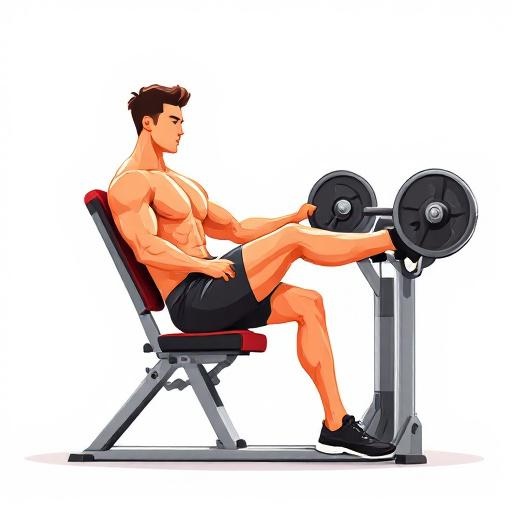
Exercise 3: Leg Press
Primary: Quadriceps | Secondary: Glutes, Hamstrings
3
Sets
12-15
Reps
60s
Rest
Why This Exercise
The leg press allows you to train your quads with heavy weight without the balance and core demands of squats. It's excellent for building leg strength when your squat form isn't yet perfect, and for adding volume after compound exercises.
Step-by-Step Form
- Sit in the machine with your back flat against the pad—no gap in lower back
- Place feet shoulder-width on the platform (higher = more glutes, lower = more quads)
- Unrack the weight by straightening legs and releasing the safety handles
- Slowly lower the platform by bending knees toward your chest
- Stop when knees reach approximately 90 degrees—do not let your lower back round off the pad
- Push through your heels to extend legs without fully locking out knees
- Control the negative (lowering) phase—don't let the weight drop
Pro Tip: Foot Position Variations
High and wide: Emphasizes glutes and hamstrings
Low and narrow: Emphasizes quadriceps (more quad isolation)
Standard (middle): Balanced development—start here as a beginner
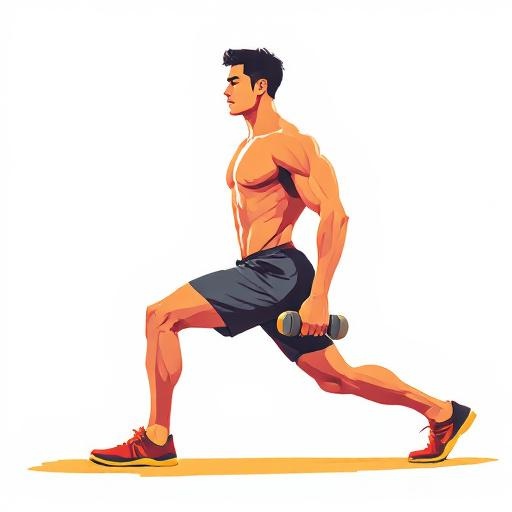
Exercise 4: Walking Lunges
Primary: Quadriceps, Glutes | Secondary: Hamstrings, Balance
3
Sets
10 each
Reps per Leg
60s
Rest
Why This Exercise
Lunges are unilateral (single-leg) movements that expose and fix strength imbalances between legs. They also train balance and coordination—skills that transfer directly to activities like hiking, sports, and climbing stairs.
Step-by-Step Form
- Stand tall with hands on hips or holding light dumbbells at your sides
- Step forward with one leg, landing heel first
- Lower your body until both knees form approximately 90-degree angles
- Back knee should hover just above the floor (not touch it)
- Keep your torso upright—don't lean forward excessively
- Push through the front heel to step forward with the back leg
- Continue alternating legs as you walk forward
Common Mistakes to Avoid
Front knee past toes: Take a longer step to keep knee above ankle
Narrow stance: Step as if on train tracks (hip-width apart), not a tightrope
Rising on back toes: Push through front heel, not back foot
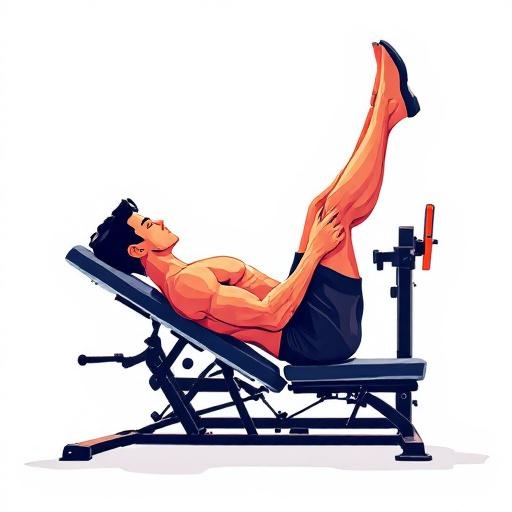
Exercise 5: Lying Leg Curl
Primary: Hamstrings
3
Sets
12-15
Reps
45-60s
Rest
Why This Exercise
The leg curl isolates the hamstrings through knee flexion—a function not trained by RDLs. Combining RDLs (hip extension) with leg curls (knee flexion) ensures complete hamstring development and reduces injury risk.
Step-by-Step Form
- Lie face-down on the machine with the pad resting on your lower calves (just above ankles)
- Adjust the machine so your knees align with the pivot point
- Grip the handles and keep your hips pressed into the pad throughout
- Curl the weight by bending your knees, bringing heels toward your glutes
- Squeeze hamstrings hard at the top of the movement for 1 second
- Lower the weight slowly (3 seconds) back to the starting position
- Do not let the weight stack touch between reps—maintain tension
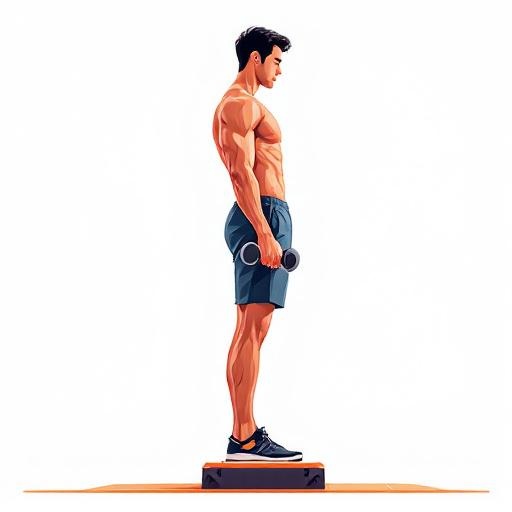
Exercise 6: Standing Calf Raises
Primary: Gastrocnemius (Calves)
3-4
Sets
15-20
Reps
45s
Rest
Why This Exercise
Calves are notoriously stubborn muscles that require high reps and full range of motion to grow. Don't skip them—well-developed calves improve ankle stability, running performance, and overall leg aesthetics.
Step-by-Step Form
- Stand on a calf raise machine or step with balls of feet on the edge, heels hanging off
- Position shoulders under the pads (machine) or hold a dumbbell (step)
- Lower your heels below the step level to get a full stretch in the calves
- Rise up onto your toes as high as possible—imagine you're reaching for something above you
- Squeeze hard at the top position and hold for 1-2 seconds
- Lower slowly (3 seconds) back to the stretched position
- Repeat without bouncing at the bottom
Cool-Down and Stretching (5-10 minutes)
Stretching after leg day reduces next-day soreness and improves flexibility. Hold each stretch for 30-45 seconds per side.
Essential Stretches
- • Standing quad stretch (hold ankle behind you)
- • Standing hamstring stretch (foot on bench)
- • Hip flexor stretch (kneeling lunge)
- • Pigeon pose (glute stretch)
- • Calf stretch (wall lean)
Optional: Foam Rolling
- • 30-60 seconds on each muscle group
- • Roll slowly over tender spots
- • Quads, IT band, hamstrings, calves
- • Helps reduce DOMS significantly
Best Gyms in Singapore for Leg Day
A proper leg workout requires specific equipment: squat racks, leg press machines, and cable machines. Here are top-rated Singapore gyms with excellent leg training facilities:
Anytime Fitness Bedok 85
4.9 stars (1,047 reviews) | $70-100/month
24/7 access with full leg equipment including squat racks and leg press. Great for beginners with helpful staff.
View Gym DetailsTrilogic Fitness (Novena)
5.0 stars (1,400 reviews) | Contact for pricing
Highly-rated gym with personal training options. Excellent for beginners who want guided instruction on leg exercises.
View Gym DetailsGoFit Toa Payoh
5.0 stars (288 reviews) | $88-118/month
Affordable commercial gym with complete leg training setup. Popular with heartlanders for its value and friendly environment.
View Gym Details24/7 Fitness Tampines North
5.0 stars (538 reviews) | $59-79/month
Budget-friendly 24-hour gym with squat racks and leg machines. Best value for East-siders starting their fitness journey.
View Gym DetailsAnytime Fitness Bukit Timah
4.9 stars (997 reviews) | $70-100/month
Well-equipped 24/7 gym in the West. Multiple squat racks mean less waiting during peak hours. Great for serious lifters.
View Gym DetailsAnytime Fitness City Square
4.9 stars (1,093 reviews) | $70-100/month
Central location near MRT with full equipment range. Perfect for CBD workers who want to train before or after office hours.
View Gym DetailsBrowse all 100+ Singapore gyms to find one near your home or office.
12-Week Progression Plan
Progressive overload—gradually increasing the challenge—is how muscles grow. Here's a realistic progression timeline for beginners:
| Phase | Weeks | Focus | Weight Approach |
|---|---|---|---|
| Foundation | 1-4 | Learn perfect form on all exercises | Light weight, 12-15 reps easily |
| Building | 5-8 | Increase reps within each set | Same weight, push for 15 reps |
| Loading | 9-12 | Add weight, drop back to 10 reps | +2.5-5kg per exercise |
Example: Goblet Squat Progression
Week 1
8kg x 10 reps
Week 4
8kg x 15 reps
Week 8
12kg x 12 reps
Week 12
16kg x 12 reps
Recovery: Making the Most of Rest Days
Muscles don't grow during workouts—they grow during recovery. How you spend the 48-72 hours between leg sessions determines your results.
Nutrition Requirements
- Protein:
1.6-2.2g per kg bodyweight daily (e.g., 120-150g for 70kg person)
- Carbs:
Refuel glycogen stores with complex carbs post-workout
- Timing:
Protein within 2 hours post-workout (not the "30-minute window" myth)
- Hydration:
Dehydrated muscles recover slower—drink 2-3L water daily
Sleep and Active Recovery
- Sleep:
7-9 hours nightly—growth hormone peaks during deep sleep
- Light activity:
20-30 minute walks help blood flow to muscles
- Foam rolling:
5-10 minutes reduces DOMS intensity
- Singapore tip:
Keep room cool (20-22C) for optimal sleep quality
DOMS: Pain vs. Soreness
Normal soreness (DOMS):
Dull ache in the muscle belly, appears 24-48 hours post-workout, improves with movement, peaks around day 2, resolves within 3-5 days.
Warning signs (injury):
Sharp pain during exercise, localized to one spot, doesn't improve with rest, accompanied by swelling. If you experience these, stop and consult a physiotherapist.
Frequently Asked Questions
How many times per week should beginners train legs?
Train legs twice per week with at least 48-72 hours between sessions. This frequency allows adequate recovery while providing enough stimulus for muscle growth. Research shows that training each muscle group twice weekly produces better results than once weekly for beginners. If you're just starting, you could begin with once weekly and progress to twice within 2-3 weeks as your body adapts.
My knees hurt during squats. Should I stop doing them?
Knee discomfort during squats usually indicates a form issue rather than a problem with the exercise itself. Common causes include: knees caving inward (focus on pushing knees out over toes), heels lifting (indicates tight ankles—work on mobility), going too deep too soon (start with box squats to a comfortable depth), or using too much weight before mastering technique.
If pain persists after correcting form, consult a physiotherapist before continuing. Squats are safe for healthy knees when performed correctly.
Can I do cardio and leg training on the same day?
Yes, but the order and intensity matter. Light cardio (5-10 minutes walking or cycling) is excellent as a warm-up before leg training. However, intense cardio (HIIT, long runs) before leg training will pre-fatigue your muscles and reduce strength performance. If you want to do both, either: (1) do weights first, then cardio, or (2) separate them by 6+ hours, or (3) do cardio on different days. For muscle-building goals, prioritize leg training over cardio when they conflict.
Will training legs make my legs bulky?
No—significant leg bulk requires years of dedicated training, caloric surplus, and often genetic factors. The beginner workout in this guide will produce lean, toned, and strong legs rather than bodybuilder-sized thighs. Women especially shouldn't worry about "getting bulky" as they have roughly 1/10th the testosterone levels of men, making it nearly impossible to accidentally build excessive muscle. If your goal is purely toning (not size), focus on higher reps (15-20) and moderate weight.
How long until I see results from leg training?
You'll feel results (strength gains, less fatigue during daily activities) within 2-4 weeks. Visible results (muscle definition, shape changes) typically appear around 8-12 weeks with consistent training twice weekly. Significant transformation takes 6-12 months.
Progress depends on training consistency, nutrition (especially protein intake), sleep quality, and starting fitness level. Take progress photos every 4 weeks rather than relying on the mirror daily—changes are gradual and hard to notice day-to-day.
Ready to Start Your Leg Day Journey?
Find a gym near you with squat racks, leg press machines, and the equipment you need for proper leg training.
Related Guides

Leg Day Workout Guide: Singapore Gyms
Leg Day Workout Guide: Singapore Gyms. Expert Singapore fitness guide with actionable advice, local tips, and
Tabata Workout Guide Singapore
Tabata Workout Guide Singapore. Expert Singapore fitness guide with actionable advice, local tips, and gym rec
Upper Body Workout Guide Singapore
Upper Body Workout Guide Singapore. Expert Singapore fitness guide with actionable advice, local tips, and gym
Back Workout Guide: Singapore Gyms
Back Workout Guide: Singapore Gyms. Expert Singapore fitness guide with actionable advice, local tips, and gym